


Two of the most common loading methods are a liquid sample loading and dry sample loading. Herein we briefly describe methods for both liquid and dry loading and how to choose.
Liquid Loading
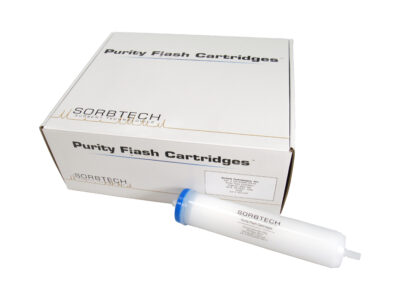
Liquid loading is often the preferred method because it requires less effort and setup. You can choose this method if your compound meets certain conditions:
-
It dissolves easily in a wide range of solvents.
-
It is already a liquid or oil that can be diluted.
-
Your sample load is typically 1% or less.
Although liquid loading works well in many cases, it is not always the best option. In some situations, dry loading can deliver better results.
Dry (Solid) Loading
Dry loading involves dissolving your sample in a solvent and then adsorbing it onto a stationary phase before adding it to the column. This approach is especially useful when:
-
Your compound has low solubility.
-
The starting conditions of your mobile phase gradient are less polar than the sample solvent.
-
You need to handle higher loading levels (typically greater than 1%).
-
You notice low resolution or peak tailing when using liquid loading, particularly with compounds that dissolve poorly in your chosen elution solvent.
👉 In short, liquid loading is faster and easier, but dry loading provides a practical solution for challenging samples, higher loads, or situations where liquid loading reduces performance.
When to Consider Dry Loading
One of the clearest signs that dry loading may be the better option is when liquid loading produces poor separation. While sample dilution can contribute to this problem, it is not the only cause. Many chemists prefer to use the same stationary phase as the main column to keep the chemistry consistent during dry loading.
However, if those interactions are not critical, you can choose alternatives such as diatomaceous earth or Celite. Celite is especially popular because it provides minimal sample adsorption, is cost-effective, and allows the sample to move through quickly. As a result, the sample concentrates at the top of the column, forming a much narrower band. Other useful matrices include alumina and Florisil™, depending on the application.
How to Dry Load a Sample
Dry loading follows a straightforward process:
-
Decide how much sample you want to load.
-
Dissolve the sample in a solvent where it dissolves easily.
-
Pour the solution into a round-bottom flask and add 2–3 times the mass of stationary phase compared to your dry compound.
-
Swirl or stir gently until the silica (or other matrix) is evenly suspended.
-
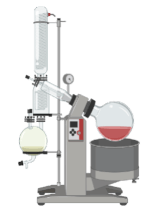
Use a rotary evaporator to remove the solvent until the matrix is dry and free-flowing.
-
Finally, load the prepared sample either into an empty flash column or onto the top of a partially packed column.
Why Choose Dry Loading?
Although liquid loading is less labor-intensive, dry loading often produces better resolution, sharper bands, and improved results—especially for compounds with poor solubility or high loading requirements.
Sorbtech EZ Flash Empty Columns
To make dry loading even easier, consider using Sorbtech EZ Flash Empty Columns, designed for:
-
Solid-load injection of samples.
-
Assembling multiple cartridges in series.
-
Reliable performance with screw caps, frits, O-rings, and end tips.
-
Easy maintenance with available replacement frits and O-rings.
-
Flexibility with 10 sizes ranging from 4 g to 330 g packing volume.
👉 With the right technique and equipment, dry loading can significantly enhance your flash chromatography workflow.
Sepabean™ Semi-Automated Flash System
The Sepabean Semi-Automated Flash System gives you the flexibility to choose either liquid or dry sample loading, and you can set this directly in the method. This versatility is just the beginning—Sepabean offers a wide range of advanced features designed to make purification easier, smarter, and more reliable.
Key Advantages of the Sepabean System
✔ Wireless Operation via Mobile Devices
Operate the system wirelessly from your tablet or smartphone. This flexibility is especially valuable for separation experiments that require protection from light or must be placed in isolators.
✔ Power Failure Recovery
Unexpected power outage? No problem. The built-in power-off recovery function minimizes data loss and keeps your work safe.
✔ Automated Separation Method Recommendations
The software includes a built-in database that suggests the most suitable separation method based on key input data. This feature saves time and improves efficiency by guiding users toward optimized methods.
✔ Integrated Fraction Collector
LCD-equipped tube racks make it easy to monitor, label, and track fractions during collection.
✔ Local Network Data Sharing
Multiple instruments can connect to form a local area network, enabling seamless internal data sharing and optimizing lab resources.
✔ 21-CFR Part 11 Compliance
Designed to meet FDA regulatory requirements, the control software ensures system safety and data integrity, making the Sepabean an excellent fit for pharmaceutical R&D labs.
Smarter, Simpler Purification
The Sepabean system combines smart purification technology with Touch & GO simplicity. With a clean, user-friendly interface, even new users can run complex separations quickly and confidently. Whether you are performing routine purifications or challenging separations, the Sepabean helps you achieve consistent, expert-level results with minimal training.
👉 The Sepabean Semi-Automated Flash System delivers both performance and simplicity, making it the smart choice for modern chromatography labs.