


 TLC Development Chambers: Why the Right Chamber Matters for Better Thin Layer Chromatography Results
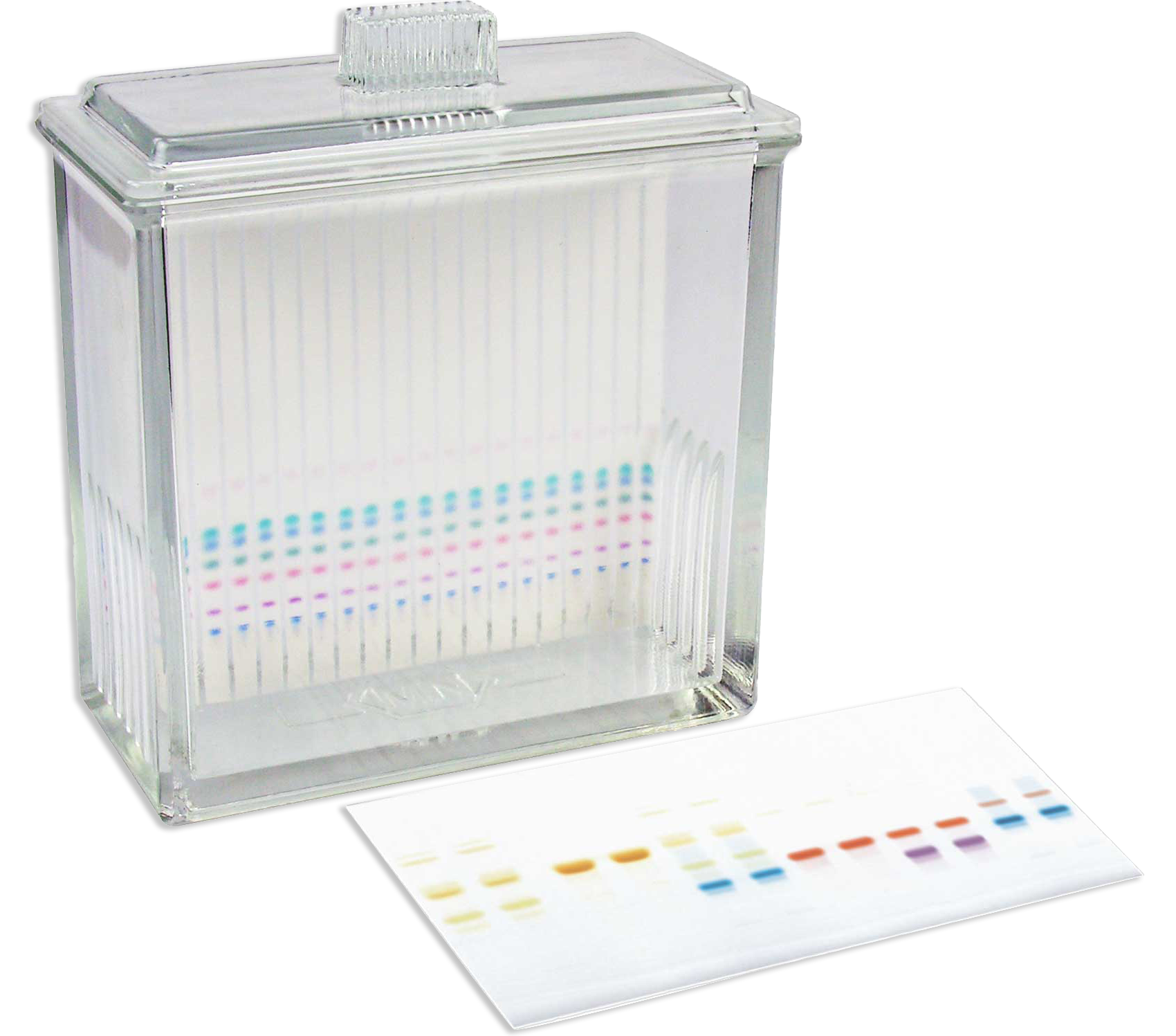
Thin Layer Chromatography (TLC) remains one of the fastest, simplest, and most cost-effective techniques for monitoring reactions, evaluating sample purity, and developing chromatographic methods. While significant attention is often given to TLC plates and solvent systems, the TLC development chamber itself can have a major impact on the quality and reproducibility of results.
A properly designed TLC development chamber helps create a controlled environment for solvent migration, leading to more consistent Rf values, improved band separation, and better overall chromatography performance.
For laboratories looking to improve efficiency while reducing solvent consumption, the Sorbtech Rocket™ TLC Development Chamber offers an innovative solution that modernizes traditional TLC development techniques. The Sorbtech Rocket is designed as a small-scale TLC development chamber that can reduce solvent consumption by up to 80-85% while providing more consistent and efficient TLC development. [sorbtech.com]
What Is a TLC Development Chamber?
A TLC development chamber is a container used to hold the mobile phase during thin layer chromatography development.
After a sample is applied to a TLC plate, the plate is placed inside the chamber with the bottom edge exposed to the solvent. The solvent travels upward through the stationary phase by capillary action, carrying compounds at different rates based on their chemical properties.
As the solvent front moves up the plate, compounds separate into distinct spots that can be visualized and analyzed.
Because solvent evaporation, chamber geometry, and plate positioning can affect results, the quality of the development chamber is often just as important as the plate itself.
Why Chamber Design Affects TLC Performance
Many laboratories still rely on beakers, jars, or other improvised containers for TLC development.
While these approaches can work, they often introduce variables that affect reproducibility.
For example:
- Excess solvent may be required
- Solvent can evaporate during development
- Plates may shift position
- Solvent fronts may develop unevenly
- Rf values can vary between runs
As a result, laboratories may experience inconsistent separations and reduced confidence in their TLC data.
Therefore, using a dedicated TLC development chamber can significantly improve reliability.
Common Challenges in Traditional TLC Development
Traditional development chambers have remained largely unchanged for decades.
However, modern laboratories face increasing pressure to improve efficiency, reduce waste, and increase reproducibility.
Common challenges include:
High Solvent Consumption
Many conventional chambers require relatively large volumes of solvent.
Over time, this increases operating costs and solvent disposal expenses.
Inconsistent Development
Changes in plate orientation or solvent levels can affect migration patterns.
Consequently, Rf values may vary from one experiment to the next.
Longer Development Times
Larger solvent reservoirs often require more setup and preparation.
As a result, workflow efficiency can decrease.
Laboratory Safety Concerns
Reducing solvent exposure remains an important objective in most laboratories.
Therefore, systems that minimize solvent usage can contribute to safer laboratory operations.
 Introducing the Sorbtech Rocket™ TLC Development Chamber
The Sorbtech Rocket™ was developed to address many of the limitations associated with traditional TLC chambers.
According to Sorbtech, the Rocket is an innovative, robust small-scale TLC development chamber designed to deliver more efficient, effective, and safer TLC handling. [sorbtech.com]
Its compact design simplifies TLC development while helping laboratories reduce solvent use and improve consistency.
The process is straightforward:
- Remove the lid.
- Add a small amount of solvent.
- Place the TLC plate in the solvent trough.
- Cover the chamber and begin development. [sorbtech.com]
Because of this simple workflow, researchers can spend less time preparing experiments and more time analyzing results.
Uses Up to 85% Less Solvent
One of the biggest advantages of the Sorbtech Rocket is its reduced solvent consumption.
Sorbtech states that solvent usage can be reduced by approximately 80-85% compared to traditional approaches. [sorbtech.com]
This provides several benefits:
- Lower solvent costs
- Reduced hazardous waste generation
- Reduced solvent storage requirements
- Improved laboratory sustainability
As solvent prices continue to rise, these savings can become significant for laboratories that perform TLC routinely.
Improves Reproducibility
Reproducibility is critical in chromatography.
The Sorbtech Rocket is designed to keep the TLC plate in the same orientation throughout development, helping contribute to more consistent results between experiments. [sorbtech.com]
In addition, Sorbtech notes that results are more consistent from test to test and that Rf overruns are eliminated using the reduced solvent approach. [sorbtech.com]
As a result, scientists can perform method development with greater confidence.
Faster and More Efficient TLC Development
Laboratory workflows are most effective when unnecessary steps are minimized.
According to Sorbtech, the Rocket reduces overall operational time compared to traditional TLC chamber methods. [sorbtech.com]
This can be particularly valuable in:
- Academic research laboratories
- Pharmaceutical development labs
- Chemical synthesis groups
- Quality control laboratories
- Process development environments
Therefore, laboratories can improve productivity without sacrificing chromatographic quality.
Enhanced Visualization of TLC Plates
Successful TLC analysis depends on clear visualization of resolved spots.
The Sorbtech Rocket’s shape and white background are designed to provide easier TLC plate visualization. [sorbtech.com]
This can help researchers:
- Monitor separations more easily
- Compare spot movement
- Evaluate reaction progress
- Document results more effectively
Consequently, analysis becomes faster and more straightforward.
Compatible with Common TLC Plates
Flexibility is another important consideration when selecting TLC equipment.
The Sorbtech Rocket is designed for 2.5 cm × 7.5 cm (1 × 3 inch) TLC plates and can be used with glass-backed, plastic-backed, and aluminum-backed plates. [sorbtech.com]
This compatibility allows many laboratories to incorporate the Rocket into existing workflows without changing plate formats.
Applications for TLC Development Chambers
TLC development chambers are commonly used in:
- Organic chemistry research
- Pharmaceutical development
- Reaction monitoring
- Natural product analysis
- Purity assessments
- Educational laboratories
- Process chemistry
- Method development
- Flash chromatography preparation
Because TLC remains one of the quickest methods for evaluating separations, reliable chamber performance continues to be important across numerous industries.
Why Choose the Sorbtech Rocket?
Modern laboratories need tools that improve efficiency while reducing costs.
The Sorbtech Rocket offers several advantages:
- Uses up to 80-85% less solvent [sorbtech.com]
- Faster overall operation [sorbtech.com]
- More consistent TLC results [sorbtech.com]
- Fixed plate orientation during development [sorbtech.com]
- Improved visualization through chamber design [sorbtech.com]
- Compatible with glass, plastic, and aluminum-backed plates [sorbtech.com]
- Simple “fire and forget” workflow [sorbtech.com]
Together, these features make it an attractive option for laboratories seeking a more efficient TLC development process.
Conclusion
Thin Layer Chromatography continues to be an essential analytical tool because it is fast, simple, and cost-effective. However, achieving reliable results requires more than a quality TLC plate and solvent system. The development chamber itself can play a major role in chromatographic performance.
The Sorbtech Rocket™ modernizes TLC development by reducing solvent consumption, improving consistency, simplifying operation, and supporting easier plate visualization. For laboratories looking to improve TLC workflows while lowering solvent costs, the Rocket provides an innovative and practical solution.