



Many chemists like to say, “I can run a compound with my eyes closed and one arm tied behind my back.” But even seasoned scientists can improve their flash chromatography results. With a few smart adjustments, you can save time, cut costs, and get better separations. As always, these recommendations depend on the compounds you’re working with, but here are four proven ways to sharpen your methods.
1. Don’t Rely on the “Monkey See, Monkey Do” Method
In many labs, a “standard method” rules the day: a default column, a ready-to-run automated unit, and no questions asked. Over time, this approach leads to compromises, where users accept mediocre results. But what if you optimized the method instead? You might achieve higher loading, better resolution, or even detect compounds you didn’t see before.
Take the time to fine-tune your method. Load the right sample size based on the bed volume, not guesswork. Choose the best column for your separation instead of grabbing whatever is in the drawer. In short, apply a scientific approach, not just a routine.
2. Run a Quick TLC First
Before committing to a flash run, run a quick TLC. TLC Method Development Kits make this easy. With miniature plates coated in different normal and reversed phases, you can quickly test mobile phase mixtures. The kits use very little solvent, develop quickly, and help you find the best combination for your sample. By starting with TLC, you set yourself up for a cleaner, more efficient flash separation.
3. Pay Attention to Column Dimensions—Size Really Does Matter
Column size has a direct impact on your results. Using a column that’s too large or too small can reduce efficiency. Overloading a column lowers resolution, while underloading a column that’s too big can waste time and solvent.
Instead, focus on bed volume when considering sample load. In flash chromatography, a wider, shorter column often works better than a narrow, long one. It allows faster flow rates, shorter run times, lower back pressure, and less solvent use. That means faster throughput and lower costs.
4. Choose the Right Stationary Phase—Better Decisions Lead to Better Results
Even if you optimize your solvent and sample loading, poor stationary phase choices can ruin results. Particle shape and size matter. Spherical particles, for example, offer stronger beds, less fines generation, and longer column life compared to irregular particles. Tighter particle distributions usually mean sharper separations and lower back pressure.
Unmodified silica gel is common because of its high surface area, but it isn’t always the best. Amino silica, for instance, excels with basic compounds like alkaloids and speeds up neutral compound separations. In reversed phase, it works well with vitamins and sugars. Likewise, C18 phases vary in hydrophobicity, carbon load, and whether they are endcapped—each factor changes performance.
Finally, column construction matters. Not all housings are leak-free or rated for higher pressures. Cheaper polypropylene columns may leach extractables into aggressive solvents. Choosing the right column design protects your results and your investment.
Final Thoughts
Taking the time to evaluate your method, test solvents with TLC, size your column properly, and select the best stationary phase will dramatically improve your separations. Moreover, considering the costs of solvents, labor, and time, optimizing from the start isn’t just smart—it’s essential.
IN STOCK, READY FOR IMMEDIATE SHIPMENT
New lower prices, take advantage now.
Purity™ Flash Cartridges (pre-packed)
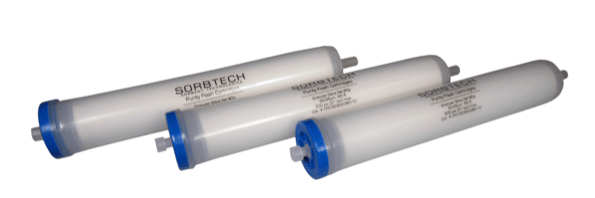
- Premium Rf™ Silica Gel – the best chromatographic silica gel in the marketplace
- Superior packing technique for uniform bed formation
- Homogeneous packed bed reduces channeling and yields higher resolution (sharper peaks)
- Standard Luer-Lock, leak-free end fittings
- Easily connect to commercially available flash systems
- Capable of assembling multiple cartridges in series
- Leak-Free spin-welded closure allows for pressure up to 400 psi
- Inert Polyethylene (PET) Frits
- 100% compatible with Sorbtech, Biotage™, Teledyne Isco™ CombiFlash™, Interchim™, Grace™, Buchi™, and Agilent™ Flash Systems