


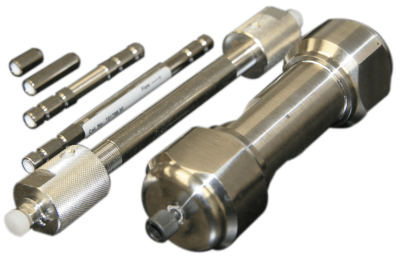
What to Do with Your Column After a Run
You’ve finished your separation—maybe even wrapped up for the day—so now what happens to the column you just used? Do you leave it connected to the system? Disconnect and toss it in a drawer? The right answer, how you care and store HPLC columns, depends on whether you’re storing it overnight for a quick re-use or preparing it for long-term storage.
Following proper procedure to care and store HPLC columns, not only extends the life of your column but also ensures reproducible, high-quality separations every time.
Overnight Storage – When Running the Same Analyte the Next Day
You have two simple strategies:
-
Leave the column on the system
-
Run a system flush cycle after your last analysis.
-
End with the highest percentage of your organic solvent in the column (e.g., methanol or acetonitrile).
-
-
Maintain a very low flow overnight
-
Keep the mobile phase flowing slowly, set at the midpoint of your gradient mix.
-
For buffered mobile phases with low organic content, add an antibacterial agent like sodium azide (0.05%) to prevent microbial growth.
-
👉 If you’re switching to a new analyte or method the next day, run a full wash cycle to clean and recondition the column first.
Longer-Term Storage
For longer breaks between runs, you need to clean and regenerate your column properly:
-
Run the following sequence (adjust column volumes depending on usage and analyte type):
-
20 CV water/acetonitrile (95/5 v-v)
-
20 CV acetonitrile
-
10 CV isopropanol
-
10 CV n-heptane
-
5 CV isopropanol
-
20 CV acetonitrile
-
Finish with your intended mobile phase until the baseline stabilizes
-
⚠️ Never leave isopropanol sitting in the column—always follow it with acetonitrile and your mobile phase.
Storage Tip: Store columns in 80% acetonitrile / 20% water, cap both ends, and mark them with the last-use date and cleaning status. This is especially helpful in shared lab environments.
Special Cleaning for Sticky Proteins
When dealing with protein fouling, use this sequence:
-
30 CV unbuffered mobile phase
-
20 CV of 0.1% TFA in water
-
20 CV of 0.1% TFA in acetonitrile/isopropanol (1:2)
-
30 CV of 100% acetonitrile
-
Finish with your mobile phase for separation
✅ Key Takeaway: Proper column care—whether overnight or long-term—protects your investment and ensures reliable results in every run.
Also see: HPLC Columns

About the Author – Randy Cooper, MBA PCM
Randy Cooper brings more than 35 years of experience in marketing technology. He earned his Bachelor of Science in Information Technology with a concentration in web development from the University of Phoenix and later completed his MBA in Digital Marketing at Liberty University. In addition, he holds the Professional Certified Marketer (PCM) credential from the American Marketing Association.
In 2009, Randy launched Buzz My Biz, a technology consulting agency dedicated to delivering enterprise-level solutions to small and mid-sized businesses. Since then, he has helped organizations grow by combining digital strategy, marketing expertise, and technical innovation.
When he steps away from the keyboard, Randy enjoys cheering on the Atlanta Braves, spending time outdoors hiking, and working in his yard.