


Polymeric Resins
Withstand High Temperatures and Pressures
Polymeric resins, made with poly(styrene-divinylbenzene) technology, offer strong and reliable performance in many applications. In addition, they act as solid extractants in the same way as bonded phase silica or activated carbon.
These resins have large surface areas and fine pore structures. Therefore, they adsorb organic compounds from aqueous solutions both quickly and effectively. Moreover, they remain stable in a wide range of conditions. For example, they can withstand acidic and strongly acidic environments. They also stay stable in alkaline and strongly alkaline solutions, as well as in organic solvents, across the full pH range of 1–14.
Another advantage is that polymeric resins are easily regenerated. As a result, you can reuse them multiple times, which increases product life and lowers operating costs.
Furthermore, extraction processes that use synthetic adsorbents bring added benefits. They reduce solvent consumption and also improve safety compared to traditional solvent extraction techniques. Therefore, polymeric resins not only perform reliably but also support more sustainable and safer laboratory operations.
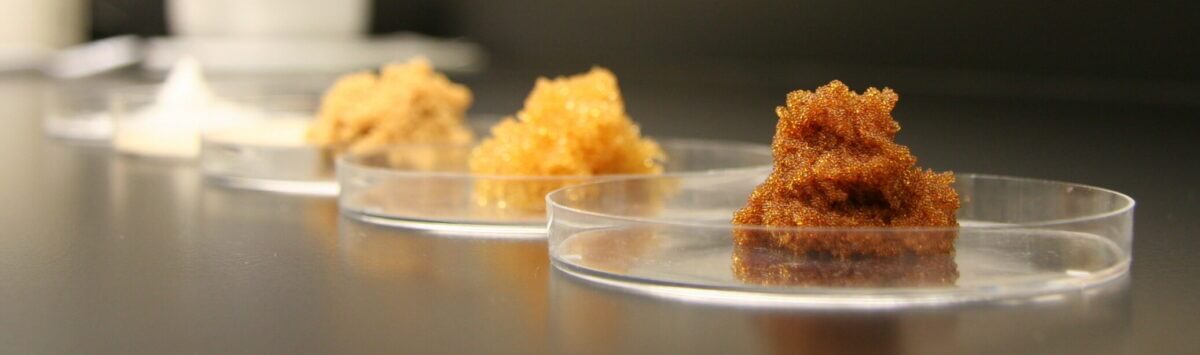
Further, extraction processes with synthetic adsorbents reduce solvent usage and provide safer operations compared to conventional solvent extraction techniques.
Advantages Include:
- Enjoy a long lifetime, even under demanding conditions
- Choose from particle sizes ranging from 10 to 1000 µm
- Access a wide selection of pore sizes to match your application needs
Polymeric resins from Mitsubishi
Our high-quality Mitsubishi product includes PSDVB Ion-exchange resins/chelating resins, synthetic adsorbents and HPLC packed columns and packing materials. If interested in the Mitsubishi HPLC resins or columns, please call or email us.
Polymeric Resins have the highest extent of crosslinking and are made using proprietary processes which provide:
- More strength to the gel
- Stability at high pressures (30,000 psi)
- Unparalleled resistance to shrinking and swelling
- High pore volume (up to 750 m2/g)
- Particle sizes ranging from 1-200 µm
- High-temperature stability (150°C)
- Pore sizes to cover the entire MW range
- Widest range of polymeric surface chemistries (ion exchange, hydrophobic, hydrophilic)