


HPLC Separations of Stevia Ingredients
Stevia, the herbal sweetener, gained approval as a food additive in the EU in December 2011. Since then, analyzing stevia—made up of different steviol glycosides—has become increasingly important.
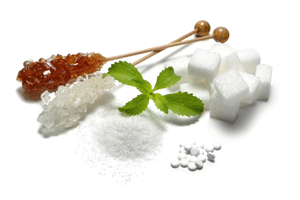
HPLC Separations of Steviol Glycosides
The following section presents HPLC separations of steviol glycosides using a classical RP 18 phase with porous silica, several HILIC phases, and a modern RP 18 phase based on core-shell silica.
Introduction
Stevia is a natural sweetener extracted from Stevia rebaudiana, a plant native to South America. Its sweetening power is roughly 300 times stronger than sugar, and for centuries, people in the border regions of Paraguay and Brazil have used its leaves to sweeten tea and coffee.
In 1887, Swiss botanist M. G. Bertoni identified and named the plant Stevia rebaudiana Bertoni. By the 1920s, plantations were cultivating stevia, and its leaves gained popularity as a natural sweetener. During World War II, England investigated stevia as a sugar substitute, and by 1954 Japan had begun greenhouse cultivation. In the 1970s, Japan officially approved stevia as a sugar alternative.
However, concerns over possible health risks led to restrictions in other regions. In 1991, the United States banned stevia products, while Europe withdrew stevia leaves and glycosides from sale in 2001 due to insufficient safety data. Despite these restrictions, research continued. Studies reviewed by the World Health Organization found no evidence of mutagenic effects in humans. As a result, regulatory attitudes shifted. Australia, New Zealand, and the USA began authorizing stevia in 2008. Finally, on December 2, 2011, the European Union approved steviol glycosides for use in food and beverages.

Composition of Stevia Sweetener
Stevia sweetener primarily contains stevioside and between nine to twelve different steviol glycosides, depending on the plant species [4]. The main contributors to its sweetness are stevioside and rebaudioside A, while other sweet compounds include rebaudiosides C, D, E, F, and ducloside A.
Separation with a Classical RP Phase
Although methods such as capillary electrophoresis (CE) and high-performance thin-layer chromatography (HPTLC) have been explored [5], HPLC remains the preferred technique for separating and analyzing steviol glycosides.
One example is the separation of steviol glycosides from the commercial product Daforto Stevia Basic. This method, available as application no. 125622 in the Sorbtech Application Database, uses an HPLC column packed with a base-deactivated RP 18 phase based on porous silica. The eluent is an isocratic mixture of acetonitrile and phosphate buffer (pH 2.6). Detection takes place with a UV detector at 210 nm.
With this classical RP setup, nine steviol glycosides can be fully separated within 20 minutes, providing reliable and reproducible results.