


Introduction to HPLC
High-Performance Liquid Chromatography (HPLC) is one of the most powerful tools in modern chemistry. It gives scientists the ability to separate, analyze, and measure compounds in complex mixtures. Because it is both versatile and precise, HPLC is widely used in pharmaceuticals, food and beverage testing, environmental monitoring, forensics, and many other fields. Its capacity to handle both small and large molecules with high sensitivity makes it indispensable for researchers and analysts.
How HPLC Works
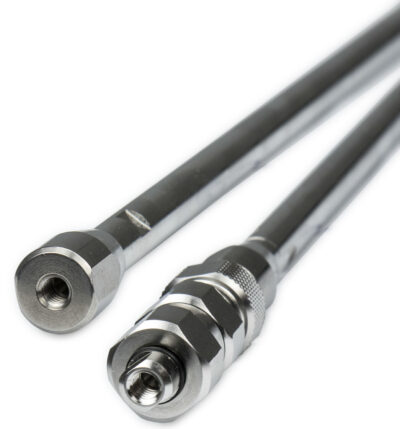
Chromatography separates mixtures by using two phases: a stationary phase and a mobile phase. In HPLC, the stationary phase is a solid material packed into a column, while the mobile phase is a liquid solvent or mixture of solvents. The sample enters the liquid stream, which pumps through the column under high pressure. Different compounds interact with the stationary phase at different strengths, which creates separation.
Why HPLC Is Effective
The strength of HPLC lies in its ability to deliver high-resolution separation and accurate detection. Scientists can modify the stationary phase to meet their needs, tailoring the method to specific applications. For example, reversed-phase HPLC uses a nonpolar stationary phase to separate hydrophobic molecules such as drugs. On the other hand, normal-phase HPLC employs a polar stationary phase to separate polar and nonpolar compounds.
Applications of HPLC
Pharmaceuticals
In drug development and production, HPLC ensures purity, potency, and stability. Researchers also use it to study drug metabolism, bioavailability, and pharmacokinetics.
Environmental Science
HPLC plays a vital role in detecting pollutants, pesticides, and contaminants in soil, water, and air. Accurate measurements help assess and monitor environmental quality.
Food and Beverage
In this field, HPLC identifies vitamins, amino acids, sugars, preservatives, and other compounds. As a result, it ensures food safety and maintains quality standards.
Forensics
Criminal investigations often rely on HPLC to analyze body fluids, drugs of abuse, and trace toxins. Its ability to detect very small amounts makes it especially valuable in this area.
Beyond the Lab
Outside of these fields, HPLC supports biochemistry, biotechnology, clinical diagnostics, and petrochemical research. It helps scientists isolate compounds, explore complex mixtures, and analyze molecular structures with precision.
Conclusion
HPLC is not just a laboratory technique; it is a cornerstone of modern science. By combining speed, precision, and adaptability, it continues to drive innovation across industries. With ongoing advancements, HPLC will remain essential for solving chemical challenges and supporting breakthroughs in research, quality control, and industry applications.

About the Author – Randy Cooper, MBA PCM
Randy Cooper brings more than 35 years of experience in marketing technology. He earned his Bachelor of Science in Information Technology with a concentration in web development from the University of Phoenix and later completed his MBA in Digital Marketing at Liberty University. In addition, he holds the Professional Certified Marketer (PCM) credential from the American Marketing Association.
In 2009, Randy launched Buzz My Biz, a technology consulting agency dedicated to delivering enterprise-level solutions to small and mid-sized businesses. Since then, he has helped organizations grow by combining digital strategy, marketing expertise, and technical innovation.
When he steps away from the keyboard, Randy enjoys cheering on the Atlanta Braves, spending time outdoors hiking, and working in his yard.